
What Customers Want to Know About Peptides
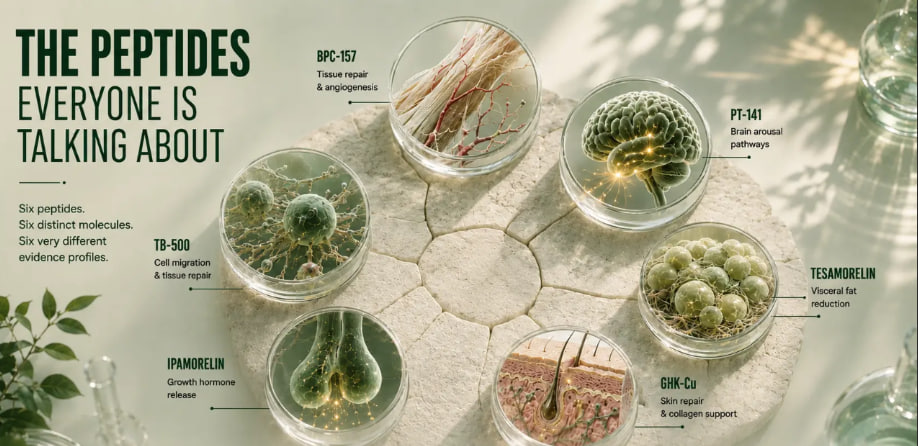
When exploring BPC-157, TB-500, PT-141, Ipamorelin, Tesamorelin, and GHK-Cu, customers most often ask about benefits, usage, differences, and how to choose. Here are 10 common questions to help you quickly understand these peptides and their benefits.
Q1: What are the benefits of each peptide?
BPC-157 and TB-500 mainly support tissue repair and soft tissue recovery; Ipamorelin and Tesamorelin support growth hormone release and body composition; PT-141 focuses on sexual health; GHK-Cu targets skin repair and anti-aging. Each addresses different needs.
Q2: What is the difference between BPC-157 and TB-500?
BPC-157 is derived from gastric juice protein and mainly supports tendon, ligament, muscle, and gut repair. TB-500 comes from thymosin beta-4 and helps transport actin to injury sites. They are often stacked as the "Wolverine Stack," suitable for those with higher recovery needs.
Q3: How do Ipamorelin and Tesamorelin differ?
Ipamorelin is a highly selective growth hormone secretagogue that stimulates natural pituitary release while avoiding significant effects on cortisol and appetite. Tesamorelin is an FDA-approved GHRH analog marketed as Egrifta, backed by full Phase III data, mainly for reducing visceral abdominal fat.
Q4: How is PT-141 different from Viagra?
PT-141 acts through melanocortin MC3R and MC4R receptors in the brain, targeting sexual motivation and reward centers. Viagra and other PDE-5 inhibitors act on blood vessels. PT-141 is FDA-approved for premenopausal HSDD.
Q5: Why is GHK-Cu good for skin?
GHK-Cu is a naturally occurring copper-binding peptide that declines with age. Multiple controlled human studies confirm it improves skin density, thickness, collagen synthesis, wrinkle depth, and elasticity.
Q6: Do these peptides require injection?
Most peptides require injection because oral use leads to rapid breakdown by digestive enzymes. Their short half-lives mean precise dosing strategies are necessary.
Q7: How long before results appear?
Timelines vary. BPC-157 and TB-500 are often reported by users to produce recovery effects within days to weeks; Ipamorelin and Tesamorelin involve growth hormone and body composition, typically taking longer; GHK-Cu skin improvements usually take weeks to months.
Q8: Can multiple peptides be used together?
Some users stack BPC-157 with TB-500. Other combinations should be based on individual needs and professional advice. Different peptides have different mechanisms, so understanding each is important before stacking.
Q9: Are these peptides safe?
BPC-157 and TB-500 show relatively few side effects in animal models; Ipamorelin has limited clinical evidence; Tesamorelin and PT-141 are FDA-approved; GHK-Cu has strong topical human data. Understanding your own situation before use is essential.
Q10: How do I choose the right peptide?
Choose by goal: BPC-157 and TB-500 for recovery; Ipamorelin and Tesamorelin for body composition and anti-aging; PT-141 for sexual health; GHK-Cu for skin repair.
Conclusion
BPC-157, TB-500, PT-141, Ipamorelin, Tesamorelin, and GHK-Cu each address different needs. Understanding their benefits and differences helps you make a more suitable choice.